How North Texas Spring Hail Quietly Destroys Asphalt Shingles
Each spring, North Texas hail sweeps across Tarrant County and the DFW metroplex. The stones hit fast, then the sky clears. For many commercial property owners, everything looks fine the next morning. Yet months later, ceiling stains appear, HVAC curbs leak during hard rains, and tenants complain. That delay is the quiet damage at work on asphalt shingles. It is the pattern seen again and again across Burleson, Fort Worth, Dallas, Arlington, Plano, Frisco, McKinney, Mesquite, Garland, Rockwall, and Terrell. It is also why facility managers who focus on lifespan math, warranty compliance, and insurance strategy treat spring hail as a roofing event, even when there are no obvious punctures on day one. This is the core of for properties across 76028 and 76097, and it sets the tone for how a smart post-storm plan should run in the DFW hail belt.
Why asphalt shingles can look fine and still be failing
An asphalt shingle is a layered product. The top layer is a bed of ceramic granules that protect the asphalt binder from ultraviolet exposure. The asphalt layer provides waterproofing. A fiberglass mat holds the structure together. Hail rarely tears through that entire stack in one clean hit. Instead, it shatters granules in a small dish-shaped area, cracks the asphalt binder beneath, and bruises the fiberglass mat. The result is a shallow crater that sheds granules in the weeks after the storm. Sun then beats on exposed asphalt. The binder dries out. Edges curl sooner than expected. Wind finds those lifted edges. The next storm pulls tabs free. By the time the leak shows up inside, months can pass. That timeline is common in Burleson after spring events that track up I-35W and US 287 toward downtown Fort Worth and beyond.
In short, the impact is cumulative. A single March storm weakens shingles. An April wind event exploits that weakness. A June gully washer sends water under the shingle line and into a wall cavity. The quiet part is not the hit. It is the slow unraveling after the hit. That is at the core of because claim timing, documentation, and system selection all hinge on proving damage that can be missed in a drive-by glance.
North Texas hail belt reality and what it means for roofs
DFW sits in one of the most active hail zones in the United States. Tarrant, Dallas, Collin, and Kaufman Counties average 8 to 12 hail events per year that produce stones one inch or larger. Supercells routinely push two inches or more. The 2024 and 2025 seasons produced some of the highest commercial hail claim volumes on record for Tarrant County. Burleson along Texas State Highway 174, the Hidden Creek Parkway commercial corridor, and the Wilshire Boulevard retail spine all absorbed multiple impacts. The same was true up US 287 into Mansfield and Arlington near AT&T Stadium, and west into Fort Worth around 76102, 76104, 76110, 76123, 76133, and 76134. Spring storms did the initial damage. Summer heat then sped up aging on exposed asphalt. By fall, many properties saw leak symptoms after what seemed like minor hail months earlier.
A shareable data point: on steep-slope roofs in the DFW market, south and southwest exposures age faster. Field inspections across retail pads and multifamily buildings show that on roofs older than 12 to 15 years, roughly half will exhibit concentrated granule loss and early cracking along the south-facing planes within one season after a major hail event. UV intensity and afternoon heat load do the compounding work after the hail has started the process. This matches what facility teams report along the I-20 corridor through Arlington and across the Bush Turnpike arc on the north side of Dallas.
Commercial properties that use asphalt shingles
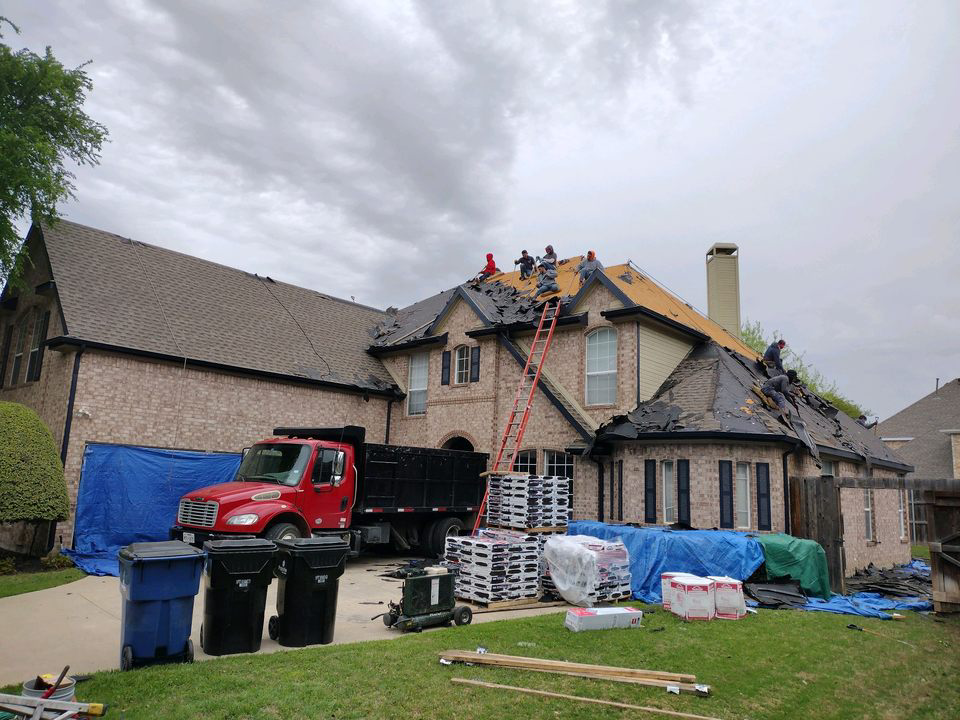
Asphalt shingles sit on a lot of commercial stock in North Texas. Strip retail buildings with gables at the facade, bank branches, restaurants along Alsbury Boulevard and Renfro Street, daycare centers, one and two-story office parks near Old Town Burleson, and multifamily clubhouses use shingles as a design fit and a budget fit. Many multifamily projects also use shingles on every building. In these settings, hail damage is not only a roof problem. It is a property operations problem. Multiple buildings, tenant uptime, safety during tear-off, and staging along active parking lots all matter during . A single missed slope can mean recurring work orders, soaked insulation, and angry tenants months later.
For owners with mixed campuses, the steep-slope shingle roofs may sit beside flat sections with TPO, PVC, or EPDM roofing. That mix adds another wrinkle. Hail can bruise a shingle but only dimple a TPO field. The EPDM roofing on a clubhouse porch may show soft bruises that do not leak today but tell a story when probed. Adjusting a claim that covers both steep and low-slope assemblies requires documentation discipline and manufacturer-aware language. Shingle hail impacts call for photographic evidence of bruising and granule displacement. Single-ply membranes call for a different set of photos, test cuts, and thickness checks. A tight report handles both and keeps the claim aligned to a single event date.
What a bruised shingle actually looks like in Burleson light
On a cloudy day, bruises can vanish to the untrained eye. Under direct late afternoon sun, they show up as duller spots where the granules have been crushed or removed. On the Burleson Commons retail district roofs, techs often find dish-shaped marks about the size of a nickel or quarter. Touching the area with moderate finger pressure can feel soft compared to adjacent surfaces. On older shingles, that indentation can crack at the center when pressed. Those are the true hail hits that carry weight in an insurance file during . Random footfall scuffs, ladder rub marks, and manufacturing blisters look different and create confusion if not sorted cleanly in the field notes.
Why leaks take time to show up after hail
Hail rarely creates an immediate hole in an asphalt shingle the way it can in aged EPDM roofing or some modified bitumen caps. Instead, it removes granules and micro-cracks the asphalt. Water does not rush through that day. Instead, UV attacks the asphalt binder in the weeks after the storm. Wind lifts tabs from weakened seal strips during hot-cold cycles. Then wind-driven rain finds its way under the shingle course. The leak follows the underlayment or a valley metal, then into a wall line, then shows up as a stain at the ceiling edge in a retail suite. In a Burleson strip center, that stain often appears above a demising wall between tenant spaces, making source tracking a longer process. By then, the adjuster window may be closing, so prompt action after the storm is part of a successful plan.
Operations note for South Fort Worth and Burleson facilities
On Wilshire Boulevard, traffic stays heavy even in off hours. Rooftop access near NE Renfro Street or Hidden Creek Parkway can require coordinated safety barricades on short notice. Night or pre-dawn inspections keep customer parking lots open. The same is true along I-35W frontage roads. For a multifamily property in 76028 or 76097, the bus stop rush makes daytime ladder work harder. During , scheduling, barricade setup, OSHA tie-off anchor planning, and tenant notices become part of the roofing scope. Smart staging reduces disruption and shortens the total project timeline.
Why some shingles fail faster than others after the same storm
Age, formulation, ventilation, prior heat exposure, and slope orientation all change the trajectory. Two buildings at the same intersection can age very differently. A 2009 slope with worn seal strips will lift sooner after hail than a 2019 slope that still has tack in its adhesive strip. A dark, heat-soaked assembly with low attic ventilation near Camp Bowie Boulevard in Fort Worth cooks under summer sun. That heat shrinks life faster after granules are lost. In contrast, a lighter shingle over balanced intake and exhaust in a breezier spot near Bailey Lake Park may hold out longer. For , documenting these variables is not a side note. It informs whether the scope lands on patching, slope-by-slope replacement, or a full system replacement across all buildings.
Granule loss is not cosmetic when it follows hail paths
Granules protect the asphalt from UV. When a storm strips them in clusters across windward planes, the asphalt layer degrades fast. Within a season, the shingle shows localized bald spots, edge curling, and brittle corners. The warranty value often shifts once hail involvement is documented. Manufacturers like GAF and CertainTeed focus warranty coverage on manufacturing defects, not storm damage. For a facility team managing , that means warranty language will not save a hail-hit shingle from accelerated failure. The claim file must carry that load.
Single-ply context: what hail does to TPO, PVC, and EPDM roofing next to shingles
Mixed campuses need a cross-assembly view. On TPO and PVC, hail typically creates surface scuffs, occasional punctures near seams, and damage at aged flashings. Heat-welded seams tend to hold unless plasticizer loss or UV aging is advanced. On EPDM roofing, hail can create soft bruises and punctures if the membrane is thin or sits over rough substrate. In Burleson’s older retail centers, the low-slope back sections behind shingled facades often carry 45-mil to 60-mil EPDM or 60-mil TPO installed a decade or more ago. Those areas warrant a close probe, seam checks, and a few test cuts to verify depth of impact. Noting Class 4 hail impact ratings on adjacent metal or composition elements helps draw a clean comparison in the narrative for the adjuster.
Leak pathways unique to shingled commercial roofs
Hail often exposes weaknesses at ridge vents, hip caps, pipe boots, step flashings, and wall transitions. At banks and restaurants along South Burleson Boulevard, the roof-to-wall transitions and sign band penetrations become repeat offenders. On multifamily, the problem shows at dormer sidewalls and chimney chases. If spring hail is followed by September wind, those areas can open further. A commercial-grade inspection maps these points across all buildings, sets a count of penetrations, and ties it to material specifications that pass manufacturer and building code requirements in the DFW metroplex.
How documentation wins during
Burleson and the greater DFW market run on proof. After a storm date, a successful claim file anchors to a few fundamentals. First, damage mapping that correlates to NOAA storm tracks and local reports. Second, slope-by-slope photo sets that show impact frequency, bruising, and granule displacement consistent with hail. Third, a written scope that shows code-required upgrades, such as drip edge, valley metal, underlayment type, and nail count per shingle, all in line with current municipal standards across Tarrant and Johnson Counties. Fourth, Xactimate line items that match what a commercial roof needs, not a residential single-building shortcut. Finally, adjuster meeting representation that walks to each location and ties evidence to the requested scope. That process increases the chances that the carrier settles on a replacement where replacement is warranted.
HB3 context and contractor compliance
Texas Department of Insurance HB3 places clear rules around who can handle storm restoration work. Proper contracts, no deductible eating, and no unlicensed claims handling are basic compliance points. In the North Texas hail belt, storm-chaser operators move in after big events on I-35W, I-20, and I-30. The Burleson market sees them every season. During , work with a Texas commercial roofing contractor that documents HB3 compliance, carries insurance, and can produce manufacturer applicator credentials from GAF, Carlisle, Firestone, Johns Manville, Versico, Sika Sarnafil, Mule-Hide, and others. Keep the vendor list tied to local addresses and crews who can return for warranty service next year and five years from now.
Cost ranges that square with DFW reality
Commercial shingle replacement costs scale with roof complexity, height, access, and total square footage. Across the DFW market in 2026, steep-slope commercial shingle replacement commonly ranges from $3.75 to $6.50 per square foot installed for standard architectural shingles and goes higher for Class 4 impact-rated shingles. Complex fascia details, tall parapets, steep pitches, and tight logistics along busy corridors like Wilshire Boulevard and Alsbury Boulevard increase labor and safety costs. For mixed-assembly sites where shingles overlap low-slope sections, add the low-slope scope to the claim. TPO at 60-mil generally runs $6 to $12 per square foot installed depending on attachment method and insulation upgrades. Modified bitumen or SPF restoration options have their own ranges. For full-campus hail claims EPDM residential roofing in Tarrant County, files commonly run from $50,000 on small pad sites to $2,000,000 or more on multifamily or large retail portfolios. Those numbers line up with the hail severity seen in 2024 and 2025.
Why Class 4 shingles matter in Burleson after hail
Class 4 impact-rated shingles carry UL 2218 test results that many Texas insurers recognize for premium credits. For facilities along US 287 and SH 174, where hail density stays high, this upgrade makes sense in the post-claim scope. While Class 4 does not make a roof hail proof, it reduces the chance of immediate granule loss from moderate impacts. Install them over code-compliant deck EPDM roofing prep, with manufacturer-required underlayment and accessories. Pair them with tight ridge and hip details. The return on this upgrade improves when the property remains under the same carrier long enough to capture premium credits, and when the portfolio sits in high-frequency swaths like south Fort Worth near I-35W and up to the 76140 corridor.
Ventilation and heat load: the hidden accelerant
Hail sets the clock. Ventilation sets the speed. Poor attic ventilation pushes deck temperatures higher in June, July, and August. In Burleson, 100-degree days stack up each summer. If hail has already stripped granules, heat cooks the asphalt binder that remains. Edge curling follows. Seal strips lose tack. Wind takes over. During , add ventilation to the scope when codes require it or when attic inspections show clear deficits. Insurers often pay for code-required ventilation upgrades if the municipality enforces the standard on reroofs. That detail ties back to the adjuster file and must be documented clearly.
Steep-slope to low-slope transitions during hail restoration
Commercial buildings blend steep and low-slope surfaces. A shingle field can die from hail, while the attached TPO or EPDM roofing survives with minor scuffs. Water, however, does not care. Transitions at saddles, crickets, and step flashings must be rebuilt in sync. Crews should reset counterflashing, step flashing, and termination bars at the exact tie-in points. On properties off I-820 and the Tom Landry Freeway, the most common error is piecemeal repair at the interface. That choice becomes the source of next season’s leaks. Successful scopes call for coordinated material selections across both roof types, correct edge metal underlayments, and FM Approved or UL-rated assemblies where required by the occupancy or insurer.
Infrared, cores, and proof for mixed roofing
On flat sections, infrared moisture surveys and core samples provide objective evidence of water intrusion that may not show during a dry inspection. On shingle slopes, thermal imaging after sunset can still flag wet decking and saturated insulation at exterior wall lines, especially above canopies. In 76028 and 76097, nighttime IR scans on retail pads along Hidden Creek Parkway routinely pick up trapped moisture the day-shift walk missed. A strong file includes those images with annotations and a roof plan overlay. That approach protects against partial approvals that ignore water trapped under low-slope areas adjacent to hail-damaged shingle planes.
Edge cases the field team sees in Burleson
Hail strikes can open small gaps at step flashing under stucco or stone veneer. Those gaps funnel water into wall cavities. The leak then appears several feet below and inside. On a bank near Old Highway 81, hail cracked aging neoprene pipe boots that did not leak until the next hard norther. On a school roof near Burleson Centennial High School, wind after hail lifted aging ridge caps, but the main field looked stable. In each case, the source did not show during a roof-only glance. Investigators had to open wall lines, probe flashings, or test with controlled water to recreate the leak. Those details matter for because they establish cause, connect dates, and defend the requested scope.
Manufacturer ecosystem and warranty alignment
Manufacturers set system rules. GAF, CertainTeed, and Owens Corning govern shingle accessories, ridge systems, and installation practices. For adjacent low-slope sections, Carlisle, Firestone, Johns Manville, Versico, Sika Sarnafil, and Mule-Hide set membrane, cover board, and attachment standards. When hail drives a full reroof scope, selecting components that support a manufacturer-backed warranty changes long-term value. A GAF architectural shingle system on steep-slope areas next to a Carlisle or Firestone TPO or a Versico EPDM membrane can align to warranty requirements on both. That plan protects the operation over the building’s mortgage cycle rather than settling for a quick fix. Shareable math: a properly installed single-ply system from Carlisle, GAF, Firestone, or Johns Manville can carry a 20 to 30 year No Dollar Limit warranty. The cost premium at install often pays back across energy savings, reduced leak events, and avoided mid-cycle repairs.
Project phasing across busy corridors
Wilshire Boulevard and US 287 stay active all day. Roof replacement over occupied retail or medical in those zones calls for tight phasing. The best sequences set safety, staging, tear-off, dry-in, and reinstall in one-day bites per slope where feasible. They protect entries, maintain ADA access, and time crane lifts during off-peak hours. For properties along the Dallas North Tollway, Bush Turnpike, or in 75201 downtown Dallas or 76102 downtown Fort Worth, noise limits and city permits add more rules. The team tasked with should have crews trained for those environments, with OSHA-compliant tie-off anchors, guardrails for steep edges, and a permanent walkway plan for future maintenance access.
How to read hail density on a campus
Hail rarely spreads evenly. South-facing slopes and windward planes collect more impacts and more severe strikes. On campuses near Alsbury Boulevard and NE Renfro Street, the wind direction through the storm corridor often shows a consistent pattern. Expect higher damage counts on the southwest and west slopes, with lighter counts on leeward planes. Gutter denting on fascia metals and downspouts can confirm direction and size. Metal HVAC hoods, shed roofs, and outdoor unit tops also log strikes. Map those clues to the slopes. During , that map becomes the plan for slope sequencing and material estimating.
What insurers expect in a DFW hail file
Carriers in North Texas see large claim volumes each spring. That reality drives a short list of basics that make files move. First, a clear date of loss. Second, photos that show real hail bruising, not scuffs. Third, measurements that align to the insurer’s estimating system. Fourth, code citations when upgrades are required. Fifth, a scope that does not skip critical elements such as ridge systems, starter courses, step flashing replacement, and underlayment types. Sixth, proof of damage on accessory items like skylights, gutters, and edge metal when appropriate. A complete package also accounts for overhead and profit where multiple trades are involved, such as roofing, gutters, exterior paint, and mechanical curb coordination.
Silicone and acrylic coatings are not a fix for hail-hit shingles
Coatings work on low-slope membranes like TPO, PVC, or modified bitumen when the substrate passes adhesion and moisture tests. On asphalt shingles, coatings introduce code conflicts, trap moisture, and harm manufacturer warranty status. For steep-slope shingle planes along the Highway 174 commercial corridor, coatings should not be part of a hail restoration scope. Reserve coatings for flat roof restoration where the system, such as SPF plus silicone or acrylic on a BUR or modified bitumen, makes technical and financial sense, and where the manufacturer will issue a 10 to 15 year warranty after proper prep and moisture testing.
The role of gutters and edge metal in post-hail performance
Hail dents gutters and downspouts even when the shingle plane looks acceptable to a casual glance. Those dents signal hail size, but they also affect drainage if they deform the profile. In a heavy Burleson storm, dented sections can hold water and dump it over the back lip. That water can then drive into fascia boards and wall systems. During , align gutter and downspout scope with the roof plan. Include edge metal that matches manufacturer standards for the shingle system and for any adjacent TPO or modified bitumen roof. The edge is where many leaks begin after a storm and where many claims fail if not documented.
Safety and access around active tenants
Retail centers along Wilshire Boulevard, medical offices near Hidden Creek Parkway, and restaurants near Old Town Burleson cannot shut down for a reroof. Crews must set barricades, mark exclusion zones, and schedule tear-off in predictable windows. Pedestrian protection at entries sits in the base scope. For multifamily along the I-35W corridor, building-by-building phasing reduces noise and dust. The team handling should be ready to coordinate with property management, post daily schedules, and document sign-offs.
Why a free inspection still needs commercial-grade depth
Post-storm free inspections vary in quality. Commercial properties need more than a fast walk. A meaningful review covers every slope, every penetration count, every transition, and every adjacent low-slope section. It includes a written report with photos, slope maps, accessory tallies, and repair-versus-replacement logic that flows from the evidence. On mixed campuses in 75126 Forney, 75150 Mesquite, 75032 Rockwall, 75024 Plano, 75033 Frisco, and 75070 McKinney, that rigor saves weeks in the claim cycle. In Burleson 76028 and 76097, it can be the difference between a partial repair and a funded full scope after a March hail event.
Key signals that shingle hail damage is significant
Decision makers often need a simple threshold checklist to justify a replacement recommendation during . These signals carry weight with carriers and with capital planning teams:
- Consistent hail bruising across test squares on multiple slopes, not limited to isolated hotspots. Granule displacement with exposed asphalt in clusters on windward planes, especially south and west slopes. Dented ridge vents, turtle vents, pipe jacks, and metal accessories that match reported hail size. Damaged step flashing or sidewall metals where hail opened gaps at mortar or siding transitions. Evidence of interior moisture on wall lines below slopes with confirmed exterior hits.
Tying steep-slope and low-slope warranties together
Many campuses in South Fort Worth, Mansfield, Crowley, and Joshua blend shingle buildings with low-slope sections. Selecting assemblies that align to credible manufacturer warranties builds long-term value. Shingle systems from GAF matched with low-slope TPO or EPDM from Carlisle, Firestone, Johns Manville, or Versico can deliver coordinated coverage when installed by authorized applicators. For owners, that means one point of accountability on both system types, clear terms for leak response, and warranty inspections that keep the property in compliance.
What facility managers can expect from a clean claim timeline
In the DFW market, the typical insurance claim timeline for hail-driven roof work runs in phases. Inspection and documentation within 30 days of loss. File opening with initial estimate. Adjuster meeting to align scope. Supplements filed when hidden damage appears during tear-off. Work scheduled and performed around tenant operations. Final invoice and depreciation release for Replacement Cost Value policies. On a large campus, staging can extend actual construction across several weeks, but the core claim steps remain the same. On projects near the Fort Worth Stockyards, Sundance Square, or the AmericanAirlines Center, permitting and city coordination can add a step. A team that manages across the metroplex knows those local variations and plans for them up front.
The maintenance plan after replacement
A new shingle roof installed after a hail claim still needs care. Twice-annual inspections before and after the main hail season catch small issues early. Documented fastener checks, sealant refresh at penetrations, and debris clearing keep the system in warranty shape. For sites with both shingles and TPO or EPDM roofing, a combined maintenance visit keeps all assemblies current and simplifies reporting. Over time, that program reduces total cost of ownership and sets a strong baseline for any future event documentation.
Local case patterns that repeat in 76028 and 76140
On retail rows near the 76140 Fort Worth border with Burleson, the same patterns show every spring and summer. Hail peels granules from windward slopes. June heat speeds binder aging. August storms lift tabs. September and October rains drive water into step flashing along stucco walls. By November, interior stains appear at tenant demising walls. The fix becomes disruptive in holiday season unless the spring hail was documented and scheduled in time. Timely planning prevents that scramble.
Surprising but shareable: why roofs older than 15 years tip fast after one storm
For asphalt shingles in the DFW hail belt, roofs past 15 years show a steep drop in remaining service life after one major hail event. Field data across Burleson, Arlington 76011 and 76018, Dallas 75201 and 75240, and McKinney 75070 shows that more than half of those older shingle roofs move from functioning to replacement-justified within a single spring season once hail has started the granule loss and binder exposure process. The combination of spring hail plus summer heat push them over the edge. That pattern is cited often in adjuster meetings and by portfolio managers who measure roof life against the mortgage cycle.
Why local presence matters in the DFW hail cycle
Hail events bring a wave of temporary operators. The difference in outcome for often comes down to who handles the file, not only what the storm did. Local crews know the Burleson permitting desk cadence, the I-35W and I-20 traffic windows, the needs at properties near the Fort Worth Convention Center or Dickies Arena, and the stepped phasing required along high-traffic entries at the Burleson Commons retail district. They also return for service when the first fall front exposes a weak transition. That continuity is part of actual value in North Texas.
A brief note on mixed-material campuses and energy
When a hail claim opens the door to partial reroofing, consider energy updates on low-slope sections. Polyiso insulation upgrades toward R-30 for climate zone 3A, with tapered insulation to correct ponding, change building performance in hot months. A cover board such as gypsum or HD polyiso under a 60-mil TPO by GAF, Carlisle, Firestone, or Johns Manville increases puncture resistance if hail returns next season. These decisions sit alongside the steep-slope shingle system selection and create a balanced, long-horizon plan for the entire property. They also align with Factory Mutual or UL uplift targets where required by occupancy or insurer.
What to include in a post-storm steep-slope scope
After the adjuster aligns on replacement for hail-hit shingle slopes, a clear scope protects the asset. That scope should list tear-off to the deck, deck repair allowances, code-compliant underlayment, starter, hip and ridge systems, step flashing replacement at all walls, pipe boots, ridge vents or other ventilation components, drip edge and other edge metals, and full cleanup with magnet sweep. If the site includes low-slope areas, align TPO or EPDM roofing specifications to the manufacturer’s requirements, including attachment method, cover board, and flashing details. On campuses near Texas Motor Speedway or up US 287 into North Richland Hills 76148 or Keller 76244, winds can push uplift demands higher. System selection must match those exposures.
Pulling it together for a clean, local, credible outcome
North Texas spring hail does not need to leave a visible crater to shorten a roof’s life. On asphalt shingles, the quiet failure path runs through granule loss, UV exposure, heat, and wind. On adjacent TPO, PVC, modified bitumen, or EPDM roofing, the damage signature looks different but must be tied to the same event and file. In Burleson, Fort Worth, Dallas, Arlington, Plano, Frisco, McKinney, Forney, Mesquite, Garland, and Rockwall, the pattern repeats every spring. A well-run program starts fast after the storm, documents clearly, aligns with code and manufacturer standards, and phases work around live operations on Wilshire Boulevard, US 287, I-35W, and the rest of the DFW arterial network.
Ready for action on your property
For commercial and multifamily properties that need after a North Texas hail event, response speed and documentation win the day. A local Texas commercial roofing contractor with 24/7 coverage, manufacturer credentials across GAF, Carlisle, Firestone, Johns Manville, Versico, Sika Sarnafil, and Mule-Hide, and HB3-compliant contracts closes gaps that slow claims. Look for crews who can inspect steep-slope shingles and low-slope single-ply or BUR the same day, produce a free written assessment, and meet your adjuster with a scope that includes code requirements for Tarrant, Dallas, Collin, and Kaufman Counties. Ensure the team provides Xactimate-trained estimators, adjuster meeting representation, infrared moisture surveys where needed, and coordinated schedules across tenant operations. A contractor anchored in the DFW metroplex with a headquarters at 107 Tejas Dr in Terrell 75160 and a 24 hours per day 7 days per week operational schedule can dispatch quickly to Burleson 76028 and 76097, Fort Worth 76102, Dallas 75201, Arlington 76011, Plano 75024, Frisco 75033, McKinney 75070, Forney 75126, Mesquite 75150, and Rockwall 75032. Request a free commercial roof inspection and a free written estimate for today, and align your property’s shingle restoration and adjacent TPO, PVC, modified bitumen, BUR, metal, SPF, silicone coating, acrylic coating, or EPDM roofing needs under one coordinated hail damage assessment and storm damage restoration plan.
SCR, Inc.
General Contractors
Roofing • Restoration • Storm Repair